


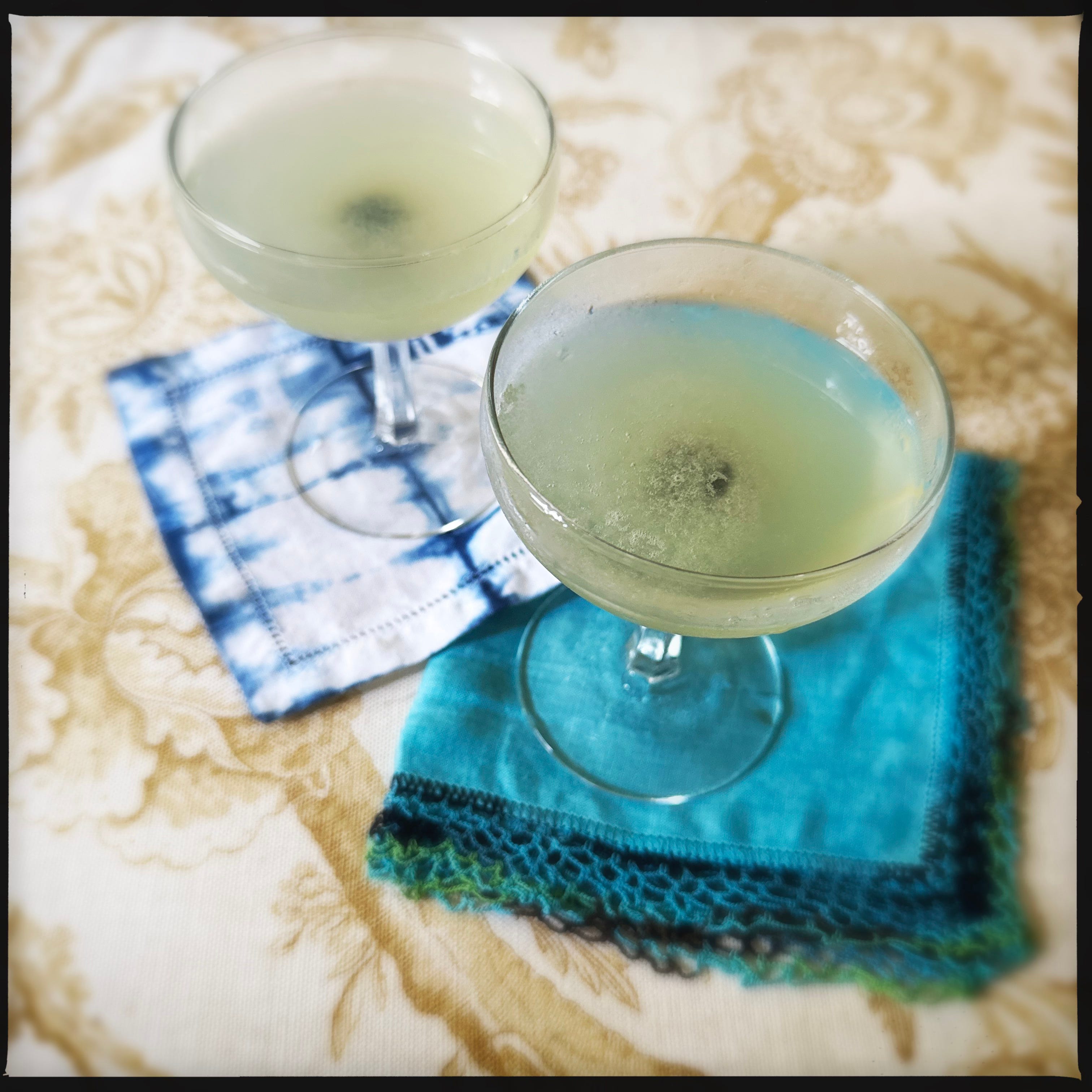
When it comes to cocktails, I especially love a tipple that tastes lusciously complicated, but is actually quite easy to put together, and one of my favorites is the Last Word. In its classic form, it’s made up of equal parts gin1, lime juice, maraschino liqueur, and green Chartreuse. The green stuff is key to the drink’s enchanting complexity. Unfortunately, in the last few years, the cost of Chartreuse has gone from relatively high to awfully hard to swallow.
There’s not much I can do to alleviate the current state of tariff-related price increases. But I might be able to help you with a solution to the hike in the price of Chartreuse if your Venn diagram also intersects at “complex bitter herbal flavor profile + craft cocktail + moderate budget.”
For the uninitiated, Chartreuse is an often polarizing liqueur with a sweet, vegetal, herby, and slightly bitter flavor. It’s made by Carthusian monks of the Grande Chartreuse monastery in a part of the French Alps also known as the Chartreuse Mountains. The recipe is a closely held secret that allegedly is only entrusted to two monks at any given time. It’s an acquired taste, like Campari or Fernet, and one that has been acquired to greater and lesser degrees over the centuries.
Can I go down a nerdy rabbit hole here for a second? The history of this elixir-cum-digestif and means of monkish self-sufficiency is twisty and marked by nearly as much mystery and intrigue as the formula itself. You can dive deep into this history if you’re inclined2, but I’ll try to be brief here.
The scene dissolves as we travel back to 17th century France and trace the winding green path …
In 1605 King Henri IV’s marshal gives a mysterious alchemical manuscript of undisclosed origin detailing the components of an “elixir of long life” to the Carthusian monks in Vauvert; at some point, the manuscript makes its way to Grande Chartreuse, the head monastery of the Carthusians.
…
It’s not a straightforward document, and it takes the monks a century and half to decipher and perfect the formula of 130ish botanicals, roots, and spices into something they could distill as a sweet, alcoholic, herbal elixir. (Credit for finalizing the recipe is given to Brother Jérôme Maubec, the monastery apothecary — pause to note that I’m into the alliteration of that title.)
…
Some three decades later, they use the formula to develop the recipe for a milder green digestif that we know today as green Chartreuse3.
…
Then, avalanche, fire, plague, and exile — during which they lose track of the precious manuscript after spiriting it out of the hands of the authorities.
…
The monks return to Grande Chartreuse, recover the manuscript, and resume production there.
…
Exile again! This time to Catalonia, where they continue to produce the liqueur4 until they’re able to return once again to the French monastery in 1929.
Chartreuse’s popularity skyrocketed during the craft cocktail boom of the 2000s, and the monks increased output to try to meet demand. That is, until 2019, when they quietly decided to cap production for environmental/sustainability reasons, as well as to safegaurd their spiritual needs.
That brings us back to the fact that for regular consumers, Chartreuse is now fairly scarce and pricey. I haven’t been able to find it at retail here in Des Moines for more than a year, but I happened upon a couple of bottles on a shelf in a Santa Fe liquor store back in March.
Wanna guess the price tag? $99. Did I pay that? Yes, I did. But I knew that bottle would only last so long, even if I was very very good about rationing it, and I wasn’t going to be able to justify spending that kind of money with any regularity.
The search began for a suitable understudy in my bar cabinet. I had read that Faccia Brutto Centerbe was a close sub, but when I taste-tested it at a local bar, I found its flavor profile, well, entirely too much. Enter Luxardo Del Santo, the green herbal liqueur made by the same company that makes the most well-known maraschino liqueur, another key ingredient in the Last Word.
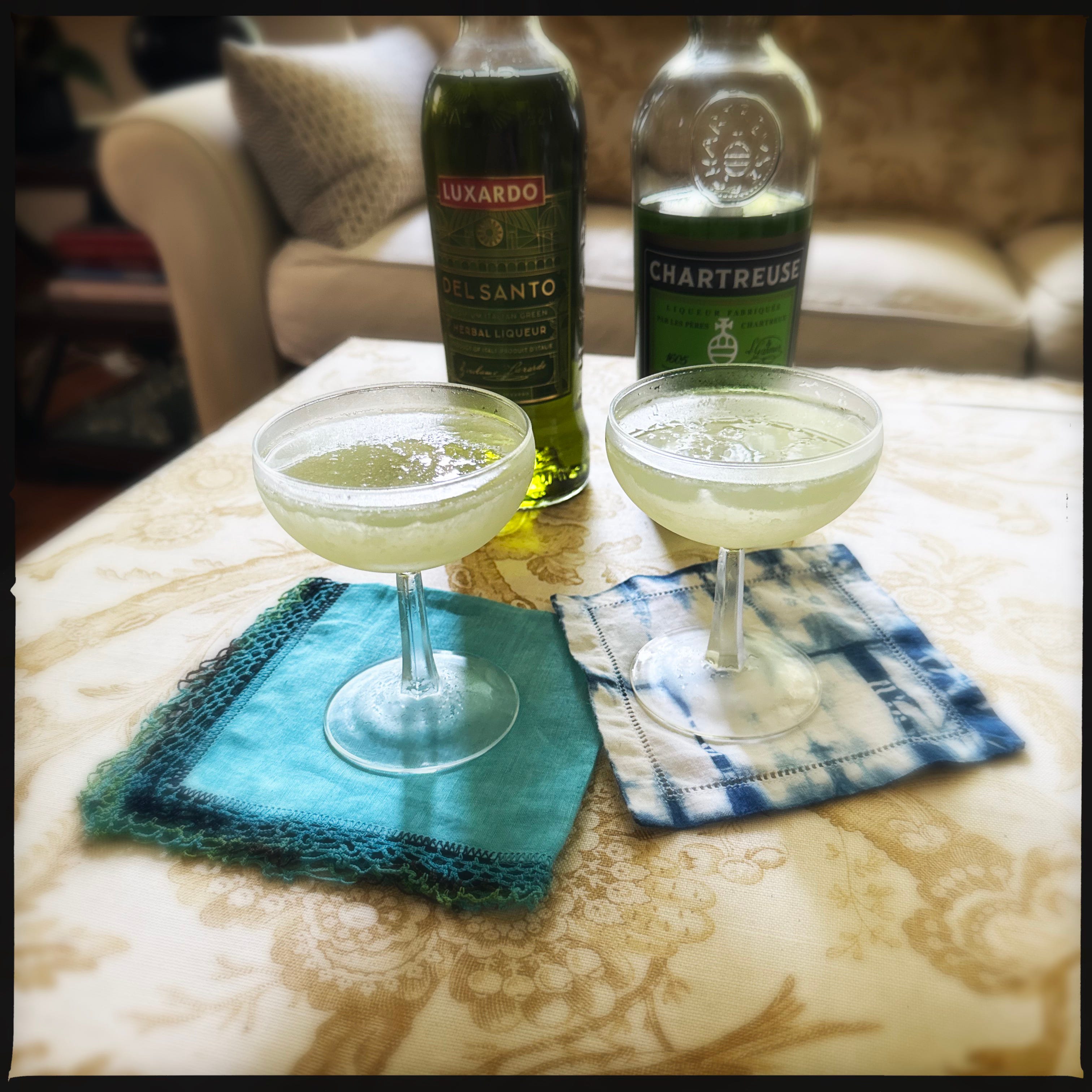
In my straight tasting, Chartreuse has more of a fennel and citrusy aspect, leaving a nice black licorice flavor lingering on the tongue. The Luxardo is sweeter, with a hit of clove and a green herbiness that leans toward basil and maybe a bit of dill.
Mixed in the Last Word, the Chartreuse version is more astringent, in a good way, with a burst of lime peel fireworks in the mouth. The Del Santo version is a little flatter, less zingy, more round, but still quite tasty. Do I prefer the Chartreuse version? Yes. But if you aren’t drinking them side-by-side, I don’t think most people would be able to tell a huge difference.
So, I’m happy to report that I can get behind Luxardo Del Santo Herbal Liqueur as a good substitute for Chartreuse in cocktails. And with a price tag in the low to mid $30s, Del Santo will give both the Carthusian monks and your wallet a bit of a break for now.
Happy weekend sipping.
Last Word
3/4 oz. gin
3/4 oz. green Chartreuse
3/4 oz. maraschino liqueur
3/4 oz. lime juice
Shake with ice and strain into a chilled coupe or cocktail glass. Garnish with a Luxardo maraschino cherry.
I also quite like riffs on the form made with blanco tequila or mezcal.
This in-depth book was produced in collaboration with the Carthusians and apparently sets the record straight on a number of historical details that have been mis-reported or murky in the past. (Found the book’s mention here, though the buying info listed is no longer accurate.)
The National Catholic Register has this distilled rundown of the history.
And, of course, there’s always Wikipedia.
Fun fact: The color we call chartreuse takes its name from the liqueur, not the other way ’round.
Through monastery moves and expulsions, Chartreuse has been distilled in something like seven different locations in France and Spain.
I’ve drank many a the Last Word with mezcal (also sometimes called the Ultima Palabra or even the Closing Argument). Love the interplay between the smoky mezcal and the herbal chartreuse. Lucky for me, Youngest worked in northern Spain last year and “smuggled” home 5 bottles of the green and one yellow. ;-)
I don’t like gin, but I’ll try anything once, so this has sold me, esp if I can find a good cocktail bar with Chartreuse. Speaking of rabbit holes, we found Corn and Oil on a fancy drink menu and fell in love— and went down its rabbit hole, particularly about Falernum.